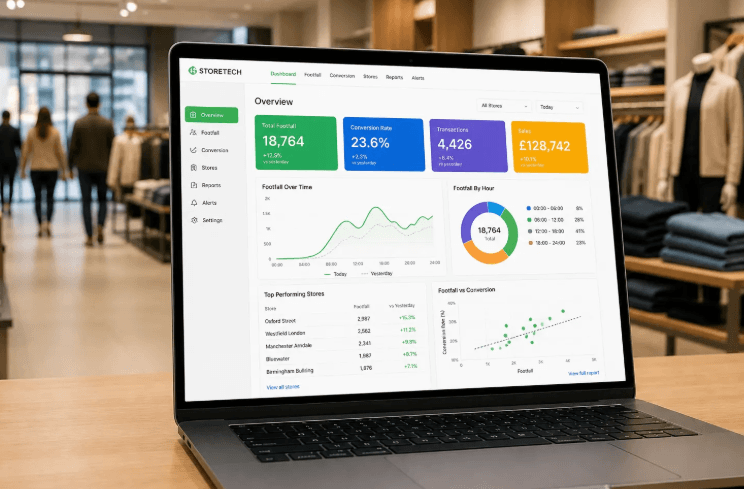
Retailers today face a common and frustrating problem: empty stores despite strong products, competitive pricing, and ongoing promotions. In 2026, success in retail is no longer just about what you sell, but how well you understand customer behavior. This is where a footfall counter and retail analytics software become game-changing tools.
Instead of guessing why customers aren’t walking in, or why they leave without buying, smart retailers are using data-driven insights to turn low-traffic stores into high-performing retail spaces.
The Real Problem Behind Empty Stores
An empty store isn’t always a marketing issue. It could be:
- Poor visibility or storefront appeal
- Ineffective promotions
- Wrong store timings
- Lack of customer engagement
- Inefficient staff allocation
Without accurate data, identifying the root cause becomes nearly impossible. A footfall counter provides the first layer of clarity by measuring how many people are actually entering your store. Meanwhile, retail analytics software dives deeper to explain why those numbers look the way they do.
What is a Footfall Counter and Why It Matters
A footfall counter is a smart tracking system that records the number of visitors entering and exiting a store. In 2026, these systems are powered by AI, video analytics, and sensor-based technologies, making them highly accurate.
Modern footfall counter systems can:
- Track real-time visitor counts
- Identify peak and low traffic hours
- Differentiate staff from customers
- Measure repeat visits
- Monitor queue lengths
This data is essential for understanding store performance and customer flow.
Retail Analytics Software: The Intelligence Layer
While a footfall counter tells you how many people visit, retail analytics software explains what they do next.
By analyzing data from the footfall counter, this software provides insights such as:
- Conversion rates (visitors vs buyers)
- Customer movement patterns
- Dwell time in different store zones
- Sales performance vs traffic trends
- Marketing campaign effectiveness
This combination transforms raw numbers into actionable strategies.
Secret #1: Fix the Visibility Problem
If your store isn’t getting enough visitors, the first step is understanding external traffic patterns.
A footfall counter installed at the entrance helps measure daily walk-ins. When integrated with retail analytics software, retailers can:
- Compare foot traffic before and after campaigns
- Identify days with low visibility
- Optimize store timings
This allows businesses to refine marketing strategies and improve storefront appeal.
Secret #2: Turn Traffic Data into Conversion Insights
Getting customers inside the store is only half the battle. The real challenge is converting them into buyers.
With a footfall counter, retailers know how many people walk in. Retail analytics software then calculates how many actually make a purchase.
This helps identify:
- Gaps in the sales process
- Ineffective product displays
- Poor customer engagement
Improving these areas directly boosts revenue.
Secret #3: Optimize Store Layout for Engagement
Store layout plays a critical role in customer behavior. If customers can’t easily find products, they’re less likely to buy.
Using insights from retail analytics software, powered by footfall counter data, retailers can:
- Identify high-traffic zones
- Analyze customer movement patterns
- Place high-demand products strategically
- Reduce congestion in areas
A well-optimized layout increases both dwell time and purchase likelihood.
Secret #4: Align Staff with Customer Flow
Staffing inefficiencies can lead to missed sales opportunities. Too few staff during peak hours leads to poor service, while too many during slow hours increases costs.
A footfall counter reveals traffic patterns, while retail analytics software helps align staffing with demand.
Benefits include:
- Better customer service
- Reduced operational costs
- Improved employee productivity
Secret #5: Measure What Actually Works in Marketing
Retailers often invest heavily in promotions without knowing their real impact.
A footfall counter tracks whether campaigns increase store visits. Retail analytics software goes further by analyzing whether those visits convert into sales.
This helps retailers:
- Identify high-performing campaigns
- Eliminate ineffective strategies
- Maximize ROI
Secret #6: Leverage Real-Time Insights
In today’s fast-paced retail environment, delayed decisions can cost money.
Modern retail analytics software, integrated with a footfall counter, provides real-time dashboards. Retailers can:
- Respond instantly to traffic spikes
- Adjust staff allocation on the fly
- Launch flash promotions
Real-time insights create agility and improve performance.
Secret #7: Predict and Plan for the Future
The true power of retail analytics software lies in its predictive capabilities.
By analyzing historical data from a footfall counter, retailers can forecast:
- Future foot traffic trends
- Seasonal demand patterns
- Inventory requirements
This ensures better planning and reduces losses due to overstocking or stockouts.
From Low Traffic to High Performance: A Transformation Story
Retailers who successfully implement footfall counter systems and retail analytics software often see dramatic improvements:
- Increased store visits through targeted campaigns
- Higher conversion rates
- Better customer experiences
- Improved operational efficiency
The transition from empty stores to high traffic isn’t accidental; it’s data-driven.
Key Features to Look For
To maximize results, retailers should choose a footfall counter and retail analytics software with:
- AI-powered accuracy
- Real-time data tracking
- Multi-store comparison
- Integration with POS and CRM systems
- Custom dashboards and reports
- Strong data privacy compliance
Choosing the right solution is crucial for long-term success.
The Future of Smart Retail
As technology evolves, the integration of footfall counter and retail analytics software will become even more sophisticated.
Future innovations include:
- AI-driven customer behavior prediction
- Personalized in-store experiences
- Advanced video analytics
- Automated store optimization
Retailers who embrace these advancements will stay ahead of the competition.
Conclusion
Empty stores are no longer a mystery; they’re a data problem waiting to be solved. With the combined power of a footfall counter and retail analytics software, retailers can gain deep insights into customer behavior, optimize operations, and significantly increase profitability.
From improving visibility and conversions to enhancing customer experience, these tools provide a complete roadmap for retail success. In 2026, the difference between struggling stores and thriving ones comes down to how effectively data is used.
Investing in a footfall counter and retail analytics software is not just a smart move; it’s a necessary step toward sustainable growth.
See also: The Real Cost and Access Tradeoffs Behind hers Reviews
FAQs
1. What is a footfall counter?
A footfall counter is a system that tracks the number of people entering and exiting a store, helping retailers measure customer traffic.
2. How does retail analytics software work?
Retail analytics software analyzes data from sources like a footfall counter to provide insights into customer behavior, sales trends, and store performance.
3. Can a footfall counter help increase store traffic?
Yes, a footfall counter helps identify traffic patterns, enabling retailers to optimize marketing strategies and attract more visitors.
4. How does retail analytics software improve conversions?
By analyzing visitor behavior and sales data, retail analytics software identifies gaps in the buying journey and suggests improvements.
5. Are these tools suitable for small retailers?
Absolutely. Both footfall counter systems and retail analytics software are scalable and beneficial for businesses of all sizes.
6. What is the biggest benefit of combining these tools?
The combination of a footfall counter and retail analytics software allows retailers to turn visitor data into actionable insights that drive revenue.
7. Is the data from footfall counters accurate?
Modern footfall counter systems use AI and advanced sensors, ensuring highly accurate tracking.